Wood Flooring in Bellflower, CA

We refinish, repair and install hardwood floors for Bellflower homeowners and landlords, starting with a moisture reading and a written estimate.

Bellflower Wood Flooring brings more than 20 years of hardwood work to homeowners and landlords in Bellflower, CA, covering wood floor refinishing, hardwood floor repair, subfloor repair, water damaged hardwood floor repair and new solid, engineered and wide plank floors. We also build hardwood stairs and replace carpet with hardwood in rooms that have been covered for decades.

Most jobs here start with a question about an existing floor rather than a showroom sample. A board is cupping, a soft spot has opened near the kitchen, or a tenant moved out and the carpet came up to reveal oak nobody knew was there. We start by measuring moisture, checking what sits under the floor and writing down what we find, so the quote describes the floor you actually have.

Every estimate is written, every reading is recorded, and every finish we apply is legal to use in the South Coast air basin. The sections below cover the floor problems we see most, the choices involved in restoring an older floor or putting in a new one, and how rentals, insurance claims and safe work practices fit into a flooring job.

Get Your Free Quote

Fast response • No obligation

So we can reach you about your request.

So we can send you a confirmation after you submit this inquiry form.

  • 20+ Years on Hardwood
  • Written Moisture Readings
  • Lead-Safe Work Practices

What we do

Our Services

Hardwood floor refinishing, repair and installation in Bellflower, CA

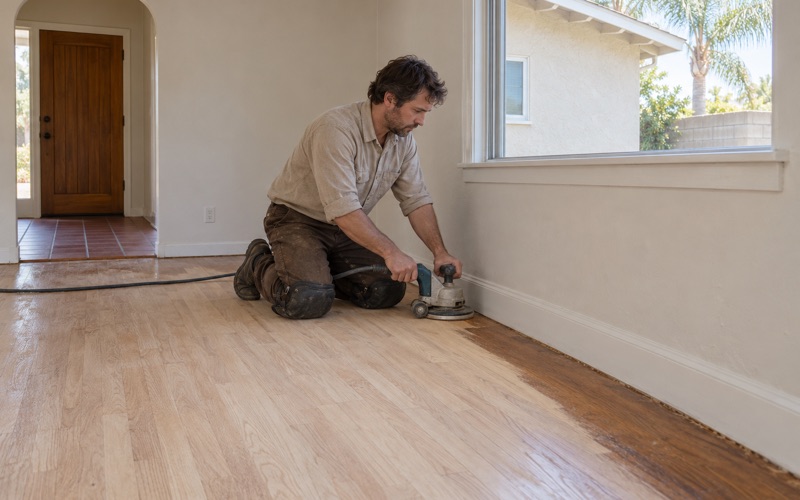
Worker running an edger along the wall to sand the last band of old finish off red oak strips in a Bellflower living room.

Wood Floor Refinishing

Full sanding, stain color changes and screen and recoat work that bring worn and dated hardwood floors back without replacing them.

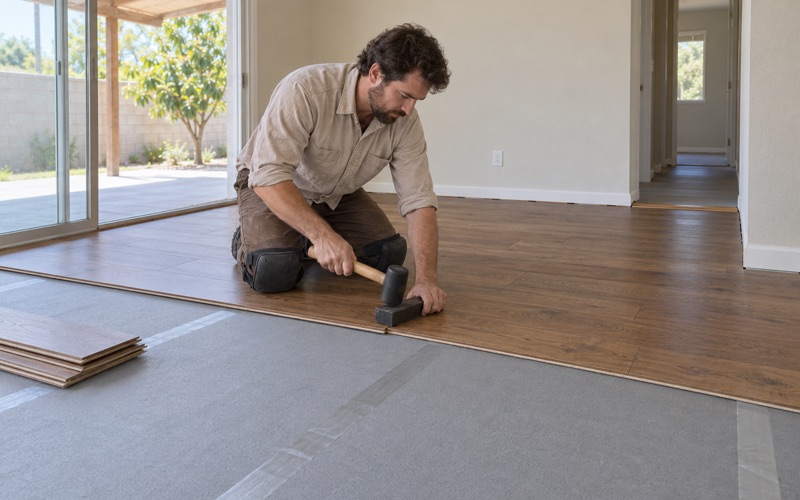
Worker tapping an engineered hardwood plank tight over underlayment in a Bellflower family room.

Engineered Hardwood Flooring

Real wood floors built on a stable layered core, installed over concrete slabs or wood subfloors after moisture testing.

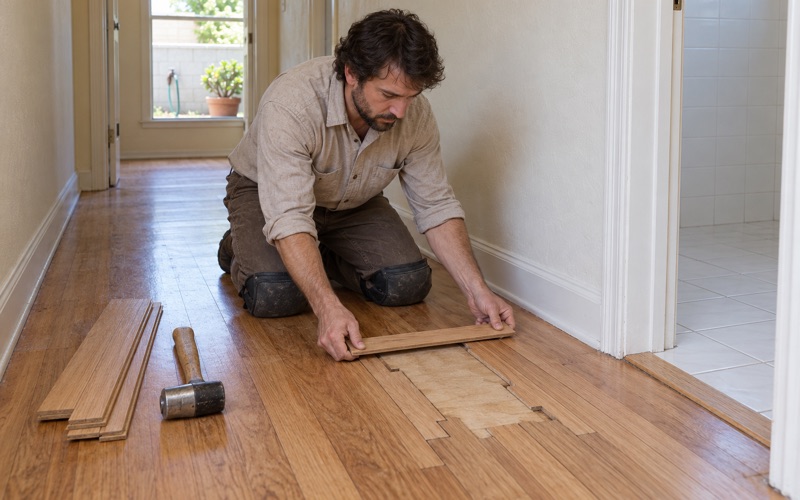
Worker lacing new oak strips with staggered joints across a patched floor-vent opening in a Bellflower hallway.

Hardwood Floor Repair

Board replacement, weave-in patches, squeak and gap fixes, and repairs to termite, pet and furnace-opening damage in existing hardwood.

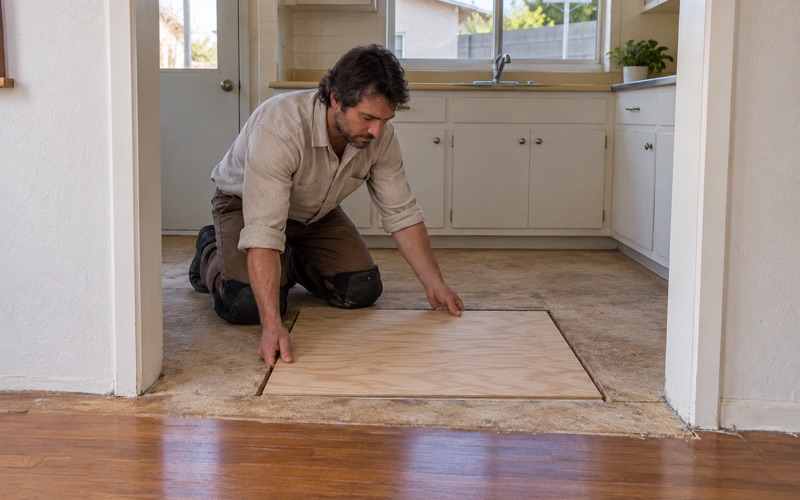
Worker lowering a new plywood panel into a cut-out section of subfloor before the oak goes back down in a Bellflower home.

Subfloor Repair

Soft spots, sagging and bounce traced to the plywood, boards or joists underneath and repaired before a new finish floor goes down.

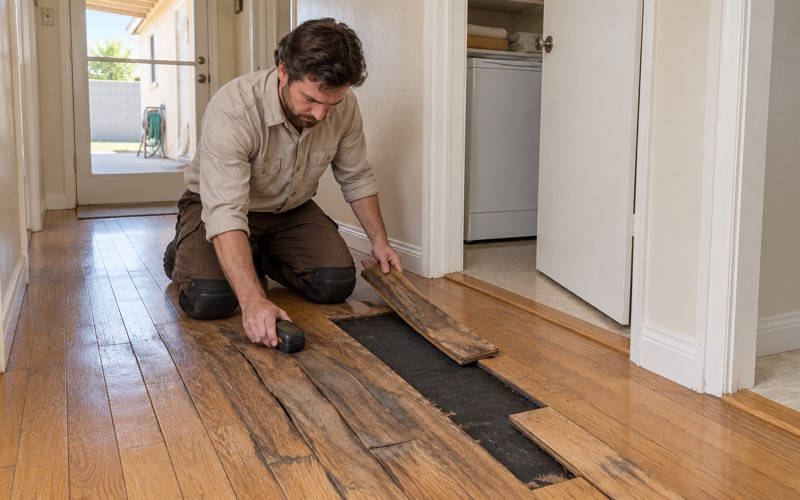
Worker pressing a moisture meter onto a cupped, water-darkened oak board beside a laundry closet in Bellflower.

Water Damaged Hardwood Floor Repair

Cupped, stained and buckled hardwood from leaks, appliances and slab leaks, dried or rebuilt with moisture records an adjuster can use.

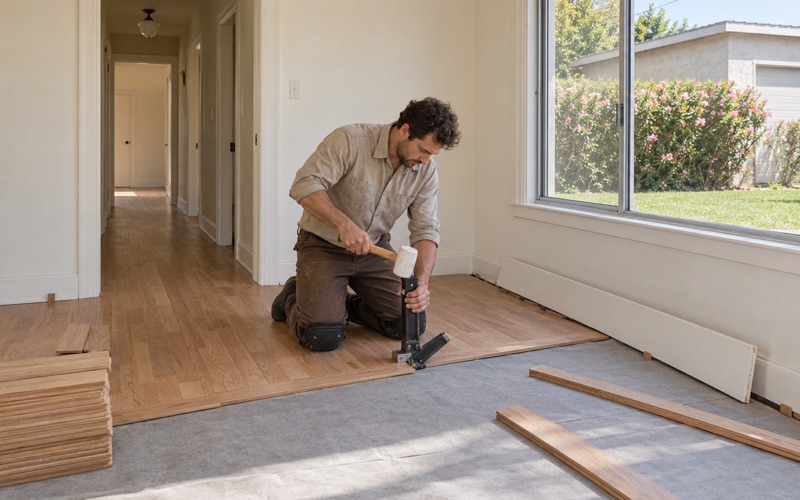
Worker nailing new solid red oak strips through a hallway doorway into the living room of a Bellflower house.

Solid Hardwood Flooring

Solid oak, hickory and other hardwoods nailed down over sound wood subfloors, finished on site or prefinished, and made to be refinished for decades.

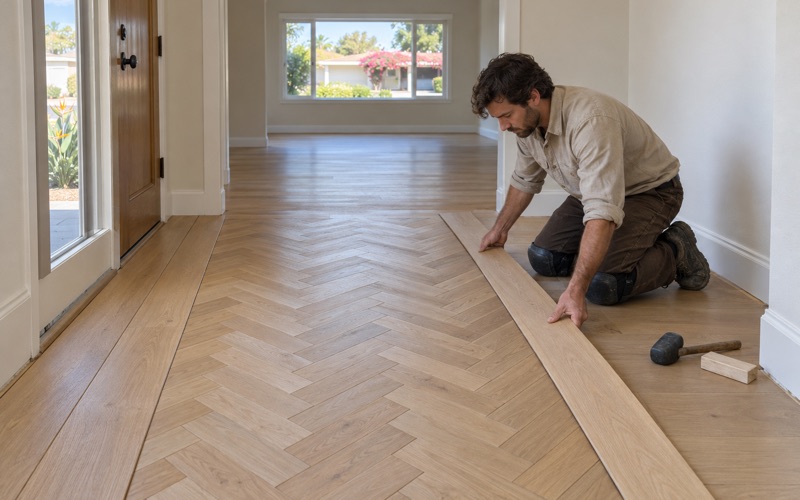
Worker fitting a wide white oak border plank around a finished herringbone floor in a Bellflower entry hall.

Wide Plank Hardwood Flooring

Wide plank floors and herringbone patterns in oak and other hardwoods, laid out from the center of the room on a flat, tested base.

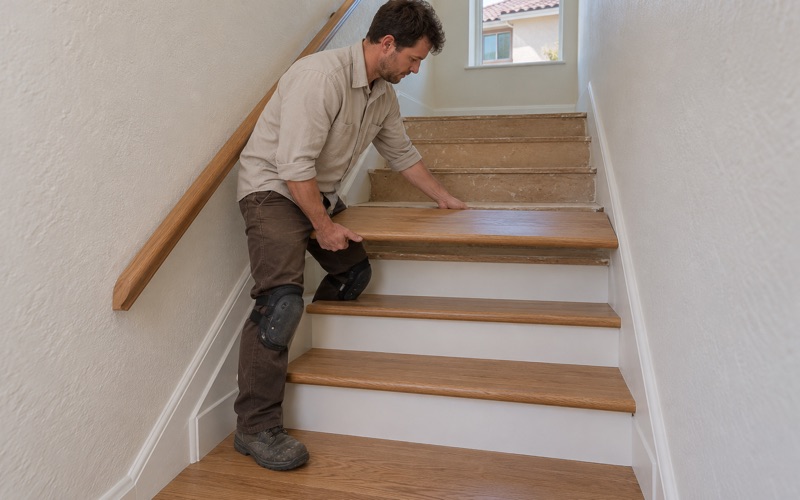
Worker lowering a new red oak stair tread with a bullnose edge onto its step in a Bellflower townhouse.

Hardwood Stairs

New hardwood treads, risers and nosings, carpet-to-wood stair conversions and stair refinishing, each step priced on its own line.

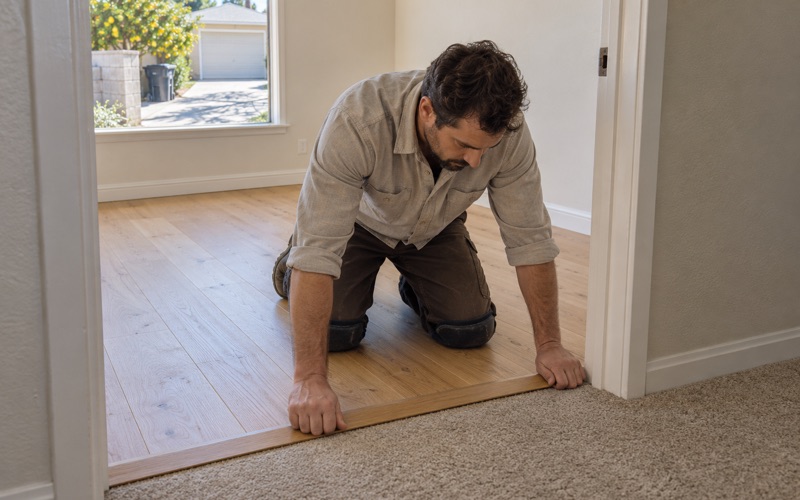
Worker pressing an oak transition strip into place where a new oak floor meets hallway carpet in a Bellflower house.

Replace Carpet With Hardwood

Carpet, pad and tack strip removed, original oak checked board by board, then either refinished or replaced with new hardwood.

Two Decades on Hardwood Floors

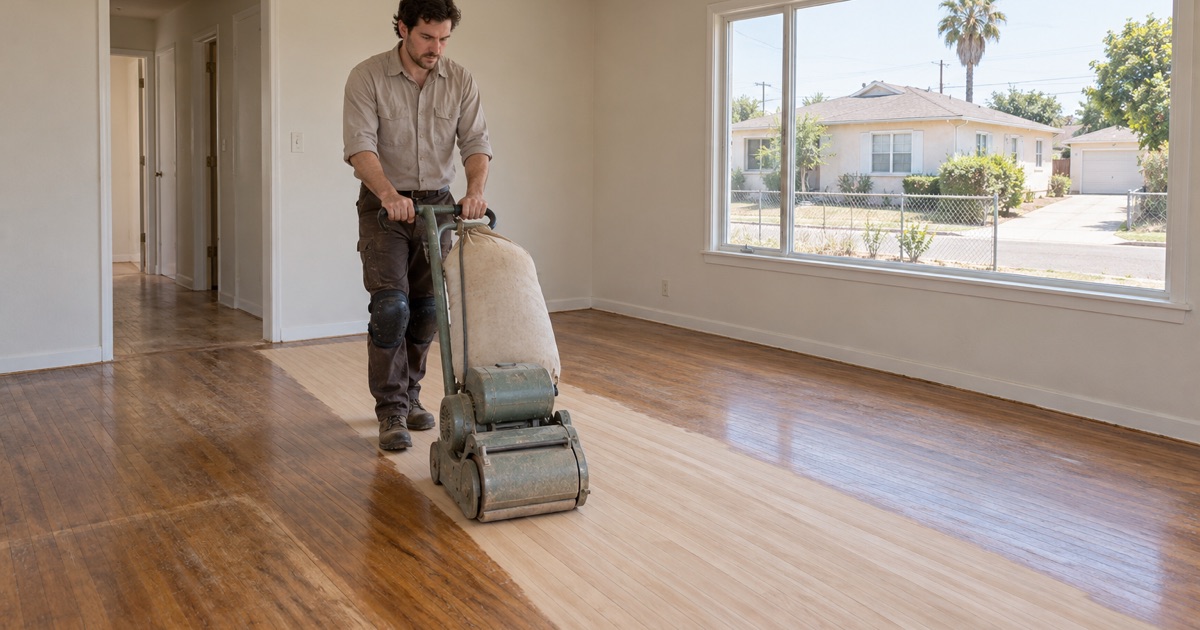
Worker guiding a drum sander across original red oak strip flooring in a 1950s single-story stucco house in Bellflower.

20+ Years of Wood Flooring Work

Bellflower Wood Flooring has been sanding, repairing and installing hardwood for more than 20 years. That time goes into the details that separate a floor that lasts from one that fails within a season: reading moisture before ordering material, matching boards that are no longer milled, and knowing when an old floor should be saved rather than replaced.

Why Choose Bellflower Wood Flooring

Board-by-Board Oak Assessment

Every original oak floor uncovered under carpet or linoleum in a Bellflower house from the 1940s or 1950s gets checked board by board for wood left above the tongue, termite damage and old repairs, so a floor with sandings left in it is refinished rather than torn out on the strength of a quick look and a full-replacement quote.

Written Moisture Readings

No hardwood gets ordered until we have measured moisture content in the wood and tested any concrete slab, with the numbers written on the estimate, so a new floor goes down on a dry base rather than cupping months later because nobody checked.

Floor Furnace Openings Closed Right

Old floor furnace openings and floor registers, common in the 1950s houses that make up so much of Bellflower, are closed with new framing and boards woven into the surrounding oak, so the patch disappears into the room rather than sitting as a plywood square hidden under a rug.

Subfloor First, Finish Second

Soft spots, bounce and sagging are traced to the plywood subfloor, board subfloor or floor joists before any finish floor is priced, mobile-home decking included, so new hardwood rests on a sound structure rather than on the same failure that ruined the last floor.

Only finishes under the 275 g/L wood-coating VOC limit go on floors here, and older houses get lead-safe practices and an asbestos question asked about old tile and mastic, so the job protects your household and your next sale rather than creating a problem that surfaces later.

Stairs Priced Per Step

Each stair tread and riser is its own line on the estimate rather than folded into a square-foot number, so you can see what a staircase costs before deciding whether to include it, rather than finding the stairs quietly padded into the flooring total.

Something Is Wrong With My Floor

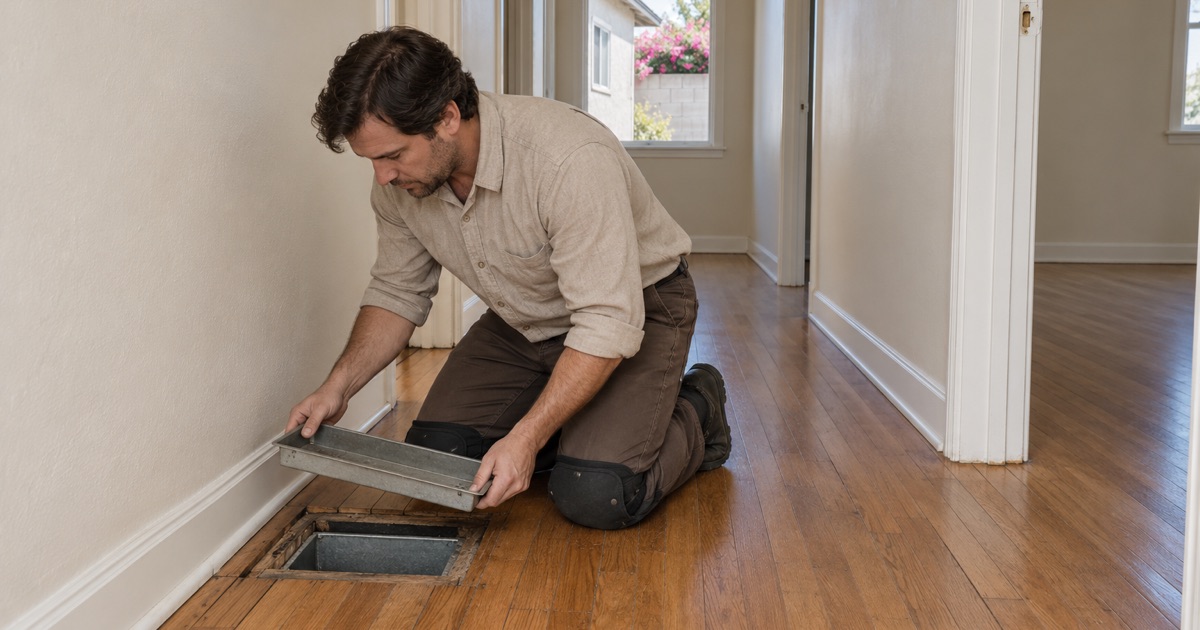
Worker lifting a floor register out of a red oak floor to inspect darkened, gapped board ends in a Bellflower hallway.

Cupping, Crowning and Buckling in Hardwood

Cupping is when board edges rise above their centers, crowning is the reverse, and buckling is a floor lifting off the subfloor entirely. Each one points to moisture moving through the wood, usually from below or from a leak. We find and measure the source before flattening anything, because sanding a cupped floor while it is still wet leaves it crowned once it dries.

Gaps Opening Between Hardwood Boards

Small seasonal gaps are normal in solid hardwood as it gives up moisture in dry months, and they often close again. Gaps that keep widening, or that show up in only one room, usually mean a moisture change, a missing expansion gap or a failing subfloor. We tell you which kind you have before recommending filler, board replacement or nothing at all.

Squeaks, Hollow Spots and Nail Pops

Squeaks come from boards rubbing on loose nails or on each other, and a hollow sound underfoot often means a glue-down floor has let go or a floating floor sits over a dip. Nail pops can usually be reset from above. We find where the movement starts and fasten or re-bond the floor there, so the fix outlasts the next few weeks.

Soft Spots and a Sagging Floor

A floor that gives underfoot is rarely a hardwood problem. It is usually a damaged subfloor, a sagging joist or rot from an old leak on a raised foundation. We open the area, check the framing and repair or sister the joist where needed, because new hardwood laid over a soft spot only hides it for a while.

Water From a Leak, Water Heater, Washer or Dishwasher

Water from a supply line, a water heater, a washer or a dishwasher travels under the boards farther than it shows on the surface. We map the wet area with a wood moisture meter, pull only what has to go and dry the rest in place. Acting in the first days is what keeps a board repair from turning into a whole-room replacement.

Warm Floor or Wet Boards Over a Slab Leak

A warm patch or damp boards over a concrete slab with no visible source often mean a slab leak in a hot or cold water line. That is a plumber’s repair first, whether a spot fix or a repipe of old galvanized pipe. Once the line is fixed, we dry, test and rebuild the part of the floor that had to come up.

Termite Swarmers, Frass and Holes in the Boards

Winged termite swarmers, small piles of pellets called termite frass and pinholes in the boards point to drywood termites, while mud tubes point to subterranean termites and fine powder can mean powderpost beetle. Treatment belongs to a pest control company. We replace the damaged boards afterward and weave them into the surrounding floor.

Pet Urine Stains in the Wood

Pet urine that sits on a hardwood floor soaks past the finish and turns the wood dark gray or black. Sanding rarely lifts those stains once they reach deep into the grain. We cut out the affected boards and weave in replacements, then refinish the area so the repair blends into the rest of the room.

White Water Rings, Dents and Deep Scratches

White water rings usually sit in the finish rather than the wood and can often be fixed with a recoat. Dents and scratches through the finish into bare wood need spot sanding or, for deep damage, a board replacement. We tell you which fix fits before you pay for a full sanding the floor may not need.

Peeling, Milky or Tacky Polyurethane

Peeling polyurethane often means a coat went on over wax or a contaminated surface, a milky finish points to trapped moisture, and tacky polyurethane to a product that never cured. Wear through to bare wood in traffic lanes is ordinary age. Each calls for a different fix, from a screen and recoat to a full sand back to raw wood.

Bringing Back an Older Floor

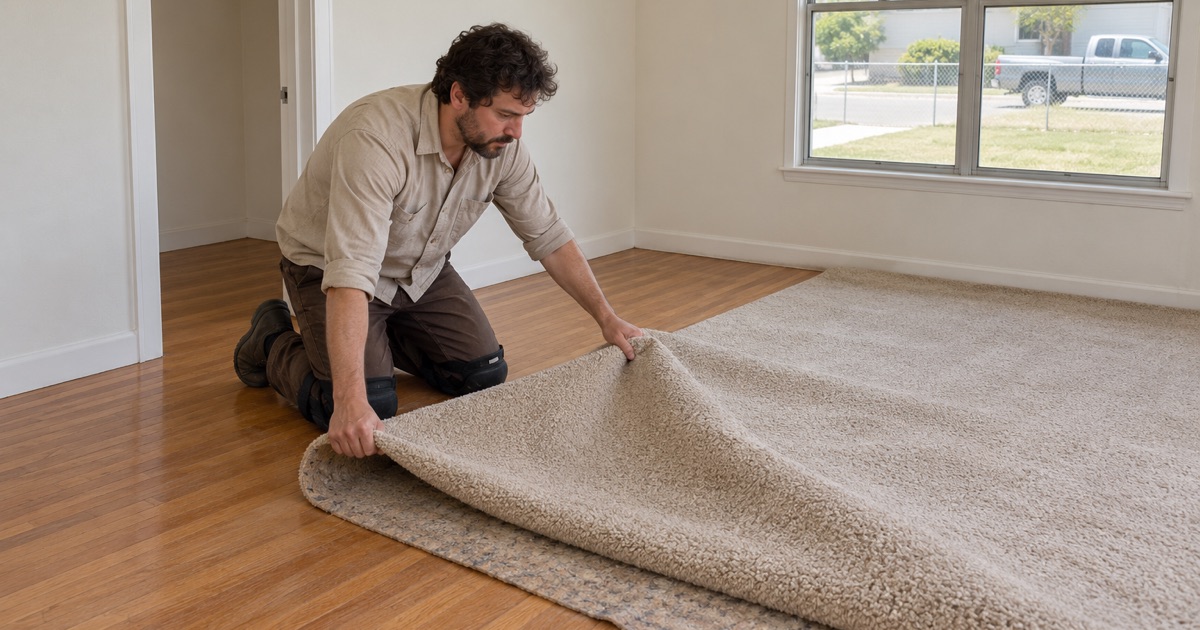
Worker folding back old carpet to reveal the original red oak floor in a 1940s Bellflower bedroom.

Original Oak Hardwood Under Carpet or Linoleum

Most owner-occupied houses in Bellflower went up between 1939 and 1959, and many still have oak strip flooring hidden under wall-to-wall carpet or linoleum. We lift a corner, check the condition, the wood above the tongue and any patched areas, and tell you plainly whether it can be refinished. Saving an original floor usually costs less than installing a new one.

What 1950s Southern California Hardwood Usually Is

Post-war houses across the region were commonly floored with narrow oak strip nailed over a board or plywood subfloor on a raised foundation, while others went slab-on-grade and carried carpet from the start. Knowing which one you have tells us how the floor was built, what can be sanded and which repairs will match.

Removing Tack Strip, Staples and Pad From Oak

Carpet tack strip is nailed straight into the oak around every wall, and pad staples dot the whole room. We pull them by hand and fill the holes before sanding so the edges look finished. Ripping tack strip out with a pry bar splinters board edges that are hard to replace.

Closing an Old Floor Furnace Opening or Floor Vent

Many 1950s houses were heated by a floor furnace set into a large opening in the hallway, with smaller floor registers elsewhere. When the furnace goes, we frame the opening properly and weave matching boards across it so the floor runs continuously. A floor furnace patch made from plywood under a rug always shows eventually.

Matching Hardwood Boards No Longer Made

Older oak strip was often milled in widths and profiles no longer sold, so a patch cut from new stock can stand out. We salvage boards from closets or other hidden areas, or have new wood milled to match, then weave the replacements in. After sanding and finishing, the repair should be hard to find.

Full Sand and Refinish or Screen and Recoat

A screen and recoat lightly abrades the existing finish and adds a fresh coat, which works when the wear is only in the finish. A full sand and refinish takes the floor to bare wood with a drum sander, an edger and a proper grit sequence, then stains and seals it. We check where the wear is before recommending either.

How Many Times Hardwood Can Be Sanded

The limit depends on how much wood sits above the tongue on a solid floor, or on the wear layer thickness of an engineered one. A thick solid floor can take several full sandings over its life, while a thin engineered wear layer may take one or none. We measure before sanding rather than assuming.

Orange Oak and Changing an Old Floor’s Color

Oil-based finishes applied decades ago turn oak orange with age, which is why so many older floors look dated. Sanding removes that finish, and a new stain or a clear waterborne polyurethane changes the color. We test stain samples on your own floor first, because red oak and white oak take color differently and blotchy stain is hard to undo.

Renting a Sander or Hiring a Refinisher

A rented drum sander takes a floor down fast, which is also how it gouges the surface or thins the wood in one pass. We use a dustless sanding system, an edger and an orbital sander in a controlled grit sequence. If you rent anyway, practice somewhere hidden and never let the drum sit still while it touches wood.

Refinishing Stairs, Treads and Railings

Stairs cannot be sanded with a drum sander, so treads, risers and nosings are done largely by hand and with small detail sanders. We price that work per tread and riser so the cost is clear from the start. Handrails and balusters can be finished to match the new floor color or to contrast with it.

Putting In New Wood Floors

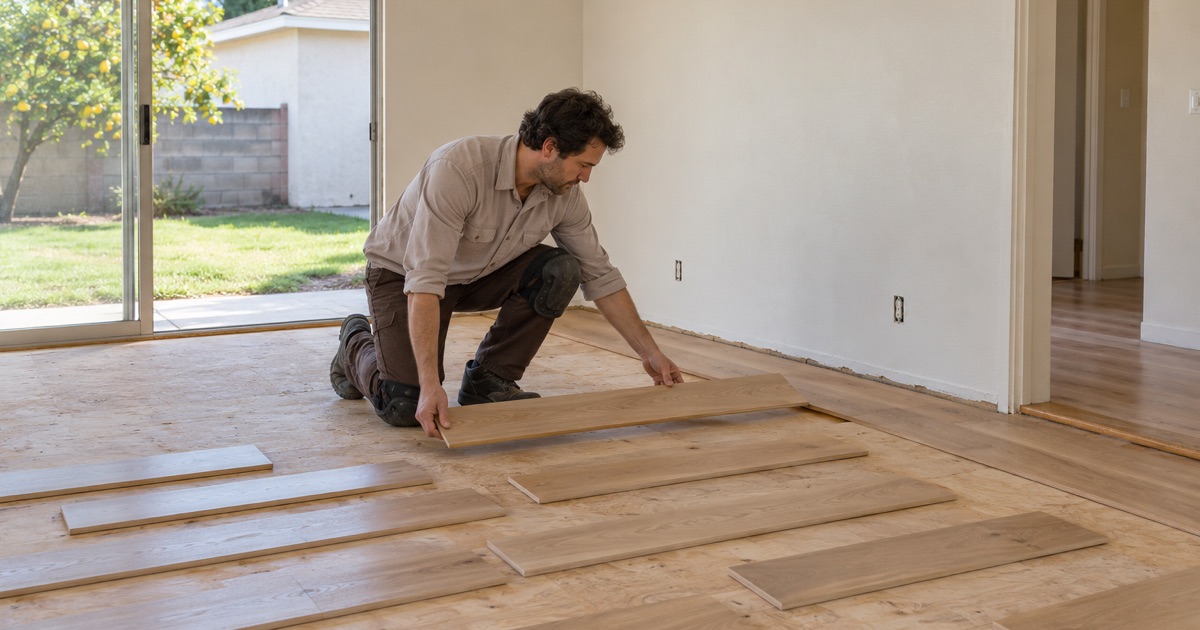
Worker racking out loose white oak planks across a bare room before a new wood floor goes in in Bellflower.

Solid Hardwood Against Engineered Hardwood

Solid hardwood is one piece of wood through its whole thickness and can be sanded many times. Engineered hardwood has a real wood wear layer over a layered engineered core construction, which makes it more stable over concrete and through moisture swings. The right choice depends mostly on your subfloor and how long you plan to keep the floor.

Hardwood Over a Concrete Slab and Moisture Testing

Wood over a slab-on-grade floor needs the slab tested first, with a calcium chloride moisture test or an ASTM F2170 in-situ relative humidity test. We record the readings, then choose a vapor retarder and install method to suit them. Skipping that test is a common reason new wood floors cup over concrete.

Replacing Carpet or Tile With Hardwood

Swapping carpet for hardwood means pulling tack strip and pad, checking the subfloor and setting transitions to the rooms next door. Old tile brings one more step: we ask whether it or its black mastic might contain asbestos before anything is scraped. Then the new floor goes down at the right height for doors and thresholds.

Real Hardwood Against Wood-Look Vinyl Plank

Wood-look vinyl plank shrugs off standing water better than wood and costs less up front, but it cannot be sanded and refinished when it wears. Real hardwood can be renewed for decades. We install hardwood and explain the trade-offs honestly, so you can decide which suits the room and how long you plan to stay.

Prefinished Against Site-Finished Hardwood

Prefinished hardwood arrives already coated, so the house is usable sooner with no sanding dust or finish fumes. Site-finished hardwood is sanded and sealed in place, giving a flat surface with no bevels and a full choice of stain color and sheen level. We help you weigh speed against flexibility for each room.

White Oak, Red Oak, Hickory and Hardness

The Janka hardness rating measures how well a species resists denting. Hickory rates harder than either oak, and white oak rates a little harder than red oak while taking stain in a cooler tone. Harder species stand up better to pets and heavy furniture, though grain and color matter as much as the number.

Wide Plank and Herringbone Hardwood Layouts

Wide plank flooring shows more of each board’s grain but moves more with moisture, so it needs a stable subfloor and careful acclimation. A herringbone pattern uses short boards laid in a zigzag and takes more layout time and more cuts. We lay out either one from the center of the room so the pattern lands evenly at the walls.

Wear Layer Thickness and Why It Matters Later

On engineered hardwood, the wear layer is the real wood on top, and its thickness decides whether the floor can be sanded later. A thin wear layer means the floor will likely be replaced rather than refinished when it wears out. We show you the wear layer on each option so the price difference means something.

Nail-Down, Glue-Down and Floating Floor Installs

Nail-down installation uses cleat nails or flooring staples into a wood subfloor and suits solid hardwood. Glue-down installation bonds wood straight to a slab, and floating installation locks boards together over an underlayment. We follow NWFA installation guidelines for whichever method fits your subfloor, including the expansion gap at every wall.

New Hardwood Stair Treads and Nosings, Priced Per Step

New hardwood stairs get solid stair treads, risers and stair nosing that match the floor they meet. Each tread and riser is priced as its own line, so you can see exactly what the staircase adds. A clean nosing where the top step meets the landing is where a stair job looks finished or does not.

Rentals, Claims and Safe Work

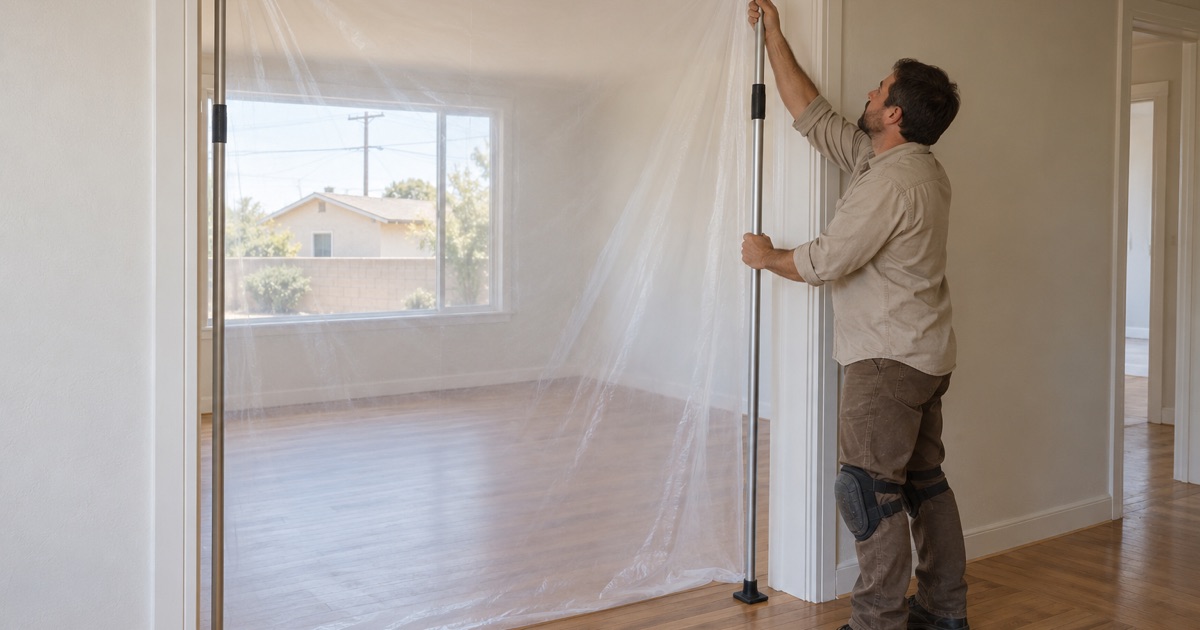
Worker setting a dust-barrier pole to hold plastic sheeting across a doorway before floor work in a Bellflower rental house.

Getting a Rented House Ready Between Tenants

When a rental turns over, the floors are often the biggest item on the list. We refinish, repair or replace them on a schedule built around the vacancy, and hand over written estimates and invoices a landlord can keep on file. That paperwork also helps if a deposit question comes up later.

Floor Damage, Normal Wear and Tear and Security Deposits

Under California Civil Code 1950.5, a landlord may deduct damage from a security deposit but not normal wear and tear. Light wear in traffic lanes usually falls on the wear side, while pet stains or deep gouges may not. We document the floor’s condition with photos and a written description so the difference is easier to show.

Working With an Insurance Claim on a Wet Floor

A wet floor claim moves faster with evidence. We trace the water to its source and record moisture readings and photos an adjuster can use, and California’s claims standards in 10 CCR 2695.9 set rules insurers follow when settling repairs. We do not manage your claim, but we give it the documentation it needs.

Putting the Floor Back After a Slab Leak Repair

A slab leak repair often means a plumber has cut through the floor or rerouted the line overhead. Once that work is done, we dry and test the slab, replace what was removed and blend new wood into the old. The floor goes back the way it should, not as a patch with a transition strip across the room.

Hardwood Repair After Termite Treatment

After drywood or subterranean termite treatment, damaged boards, and sometimes subfloor or joists, need replacing. We remove what is weak, repair the structure and weave in matching boards. Waiting until treatment is finished keeps new wood from being exposed to the same problem.

Soft Subfloors in Mobile Homes

Many mobile homes were built on particleboard decking that swells and softens after a leak. We cut out the failed decking, replace it with plywood and reinforce the framing where needed before any new floor goes down. A new floor laid over soft decking will fail in the same spot.

Old Floor Tile and Black Mastic in Older Houses

Older 9x9 asbestos floor tile and the black mastic under it can contain asbestos. We treat both as a possible asbestos question and recommend an asbestos survey before any sanding or scraping, with any removal handled by an abatement contractor under SCAQMD Rule 1403. Guessing is never an option with a material that is dangerous once disturbed.

Lead-Safe Floor Work in Houses Built Before 1978

Houses built before 1978 may have lead paint on baseboards, shoe molding and door casings that get disturbed during floor work. We follow lead-safe practices under the EPA Renovation, Repair and Painting rule, with containment and cleanup to match. With most of Bellflower’s owner-occupied houses dating from before 1960, this applies to most jobs here.

Low-VOC Floor Finishes and the South Coast Air Rules

SCAQMD Rule 1113 limits wood coatings in the South Coast air basin to 275 g/L of VOC. We use waterborne polyurethane and other finishes that meet that limit, including hardwax oil where it suits the floor. The result is less odor in the house and a finish that is legal to apply here.

Living in the House While the Floors Are Done

Most floor work can happen with you at home if it is planned room by room. Dustless sanding keeps dust down, and waterborne finishes dry faster with less odor than older products. We tell you in advance when each area will be off limits and how long to wait before furniture goes back.

Areas We Serve

Bellflower Wood Flooring provides wood-flooring throughout the greater Bellflower area, with the same crews and the same standards on every job.

Good to know

Frequently Asked Questions

How is the cost of refinishing a hardwood floor worked out?

Refinishing is priced by the square foot, with stairs, board repairs and color changes listed as their own lines. The biggest variables are the floor's condition, how many boards need replacing and whether you want a stain or a clear finish. We give a written estimate after seeing the floor, never a guess over the phone.

How long does a full sand and refinish take?

A room or a few connected rooms usually takes several days: sanding, stain if you choose one, then several coats of finish with drying time between them. Waterborne finishes let you walk on the floor sooner than oil-based ones. The schedule comes with the estimate so you can plan around it.

Do you test for moisture before installing a new floor?

Yes, on every job. We read moisture content in the wood with a meter and test any concrete slab with a calcium chloride test or an ASTM F2170 in-situ relative humidity test. The readings are written down before material is ordered, because wood laid over a wet base will cup or buckle.

Can engineered hardwood be refinished?

It depends on the wear layer, the layer of real wood on top of the engineered core. A thicker wear layer can be sanded and refinished at least once, while a thin one can only be screened and recoated. We measure it before recommending anything, so you are not sold a sanding the floor cannot take.

Are your floor finishes low-VOC?

Every finish we apply meets the South Coast air basin's 275 g/L VOC limit for wood coatings under SCAQMD Rule 1113. That covers waterborne polyurethane and the other finish types we offer. It means less odor in the house and a finish that is legal to use here.

How can I check a flooring contractor in California?

The Contractors State License Board lets anyone look up a contractor's license status online, and flooring work falls under the C-15 flooring and floor covering classification. Checking before you sign is worth the few minutes it takes, whoever you hire.

Can you replace a few damaged boards instead of the whole floor?

Usually, yes. We cut out the damaged boards and weave replacements into the surrounding floor so the joints are staggered like the original. After sanding and finishing the area to match, a weave-in repair is hard to spot, and it costs far less than a new floor.

Do you work on rental properties?

Yes. Landlords use us between tenants for refinishing, board repairs and replacements, and we schedule around the vacancy. Estimates and invoices are written and itemized, which makes them useful for your records and for any security deposit question later.

What happens if you find old tile, mastic or lead paint?

Old 9x9 tile and black mastic are treated as a possible asbestos question, and we recommend an asbestos survey before anything is sanded or scraped. In houses built before 1978 we follow lead-safe work practices. Neither is something we guess about.

Which hardwood holds up best with dogs?

Harder species on the Janka hardness rating, such as hickory or white oak, resist dents and claw marks better than softer woods. A satin or matte sheen level also hides scratches better than a gloss. No wood floor is scratch-proof, so an easy recoat matters as much as the species.

Ready to Get Started?

Request a free quote today and we'll get back to you fast.